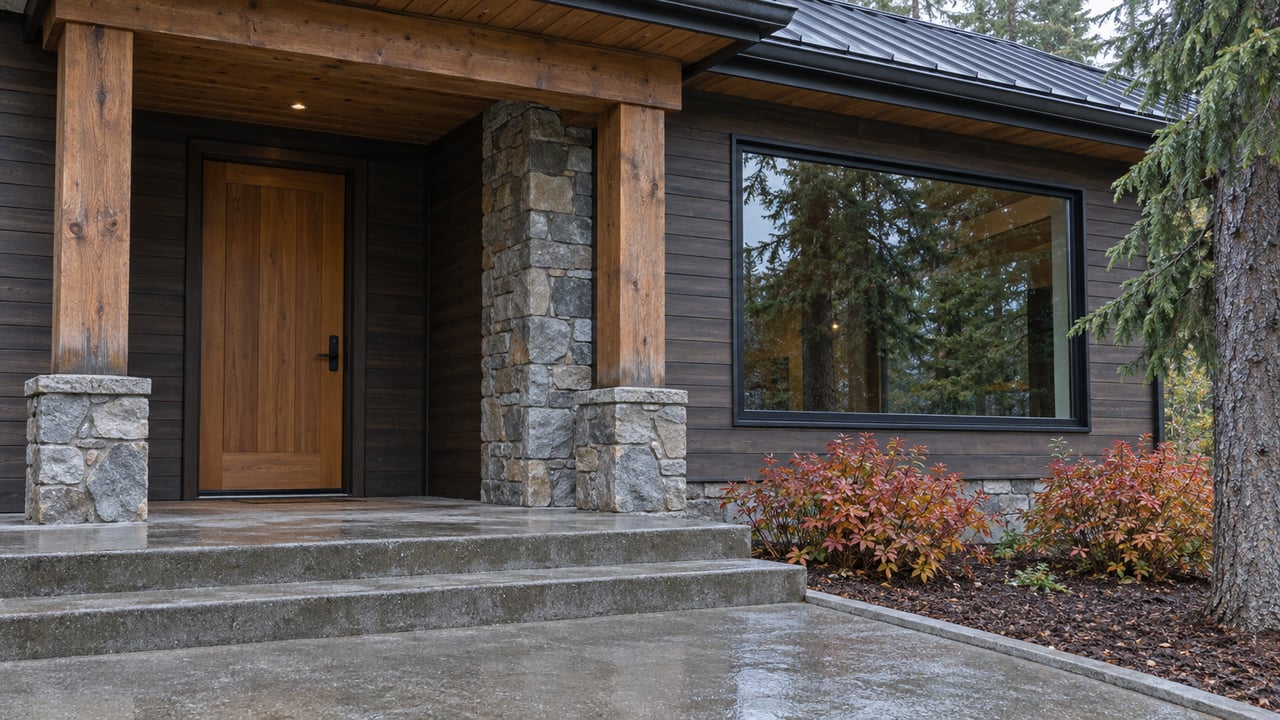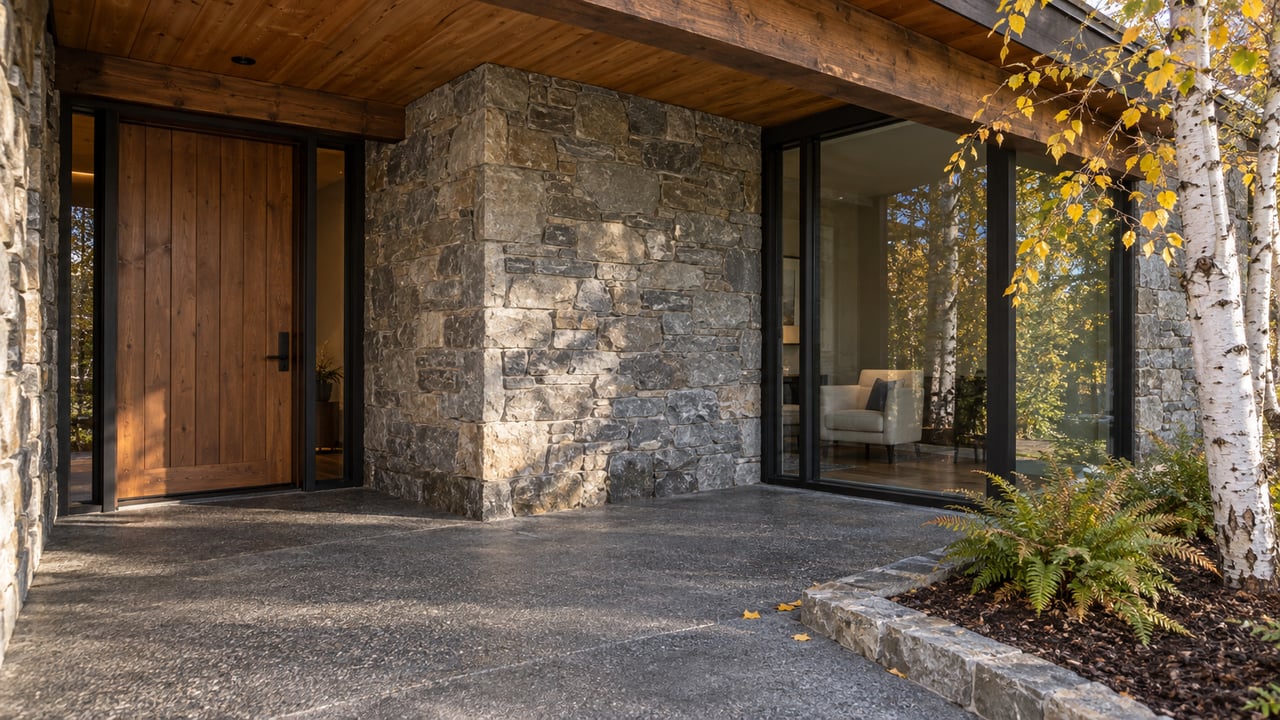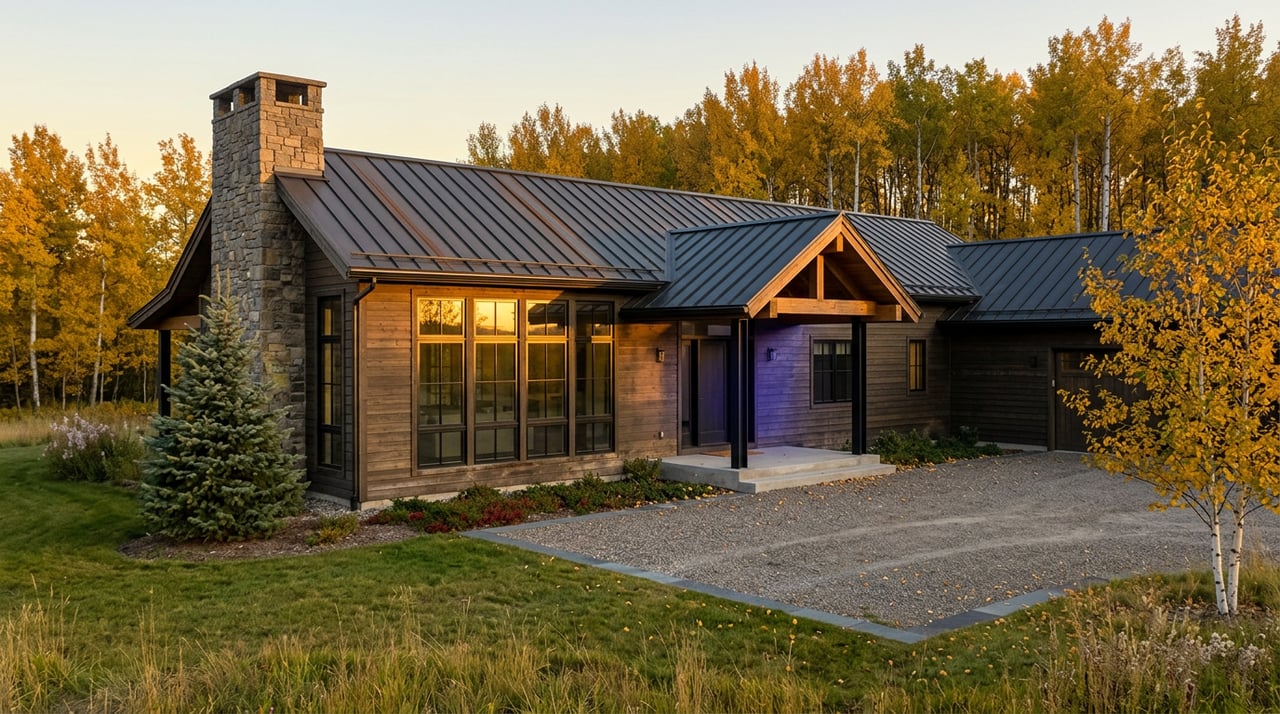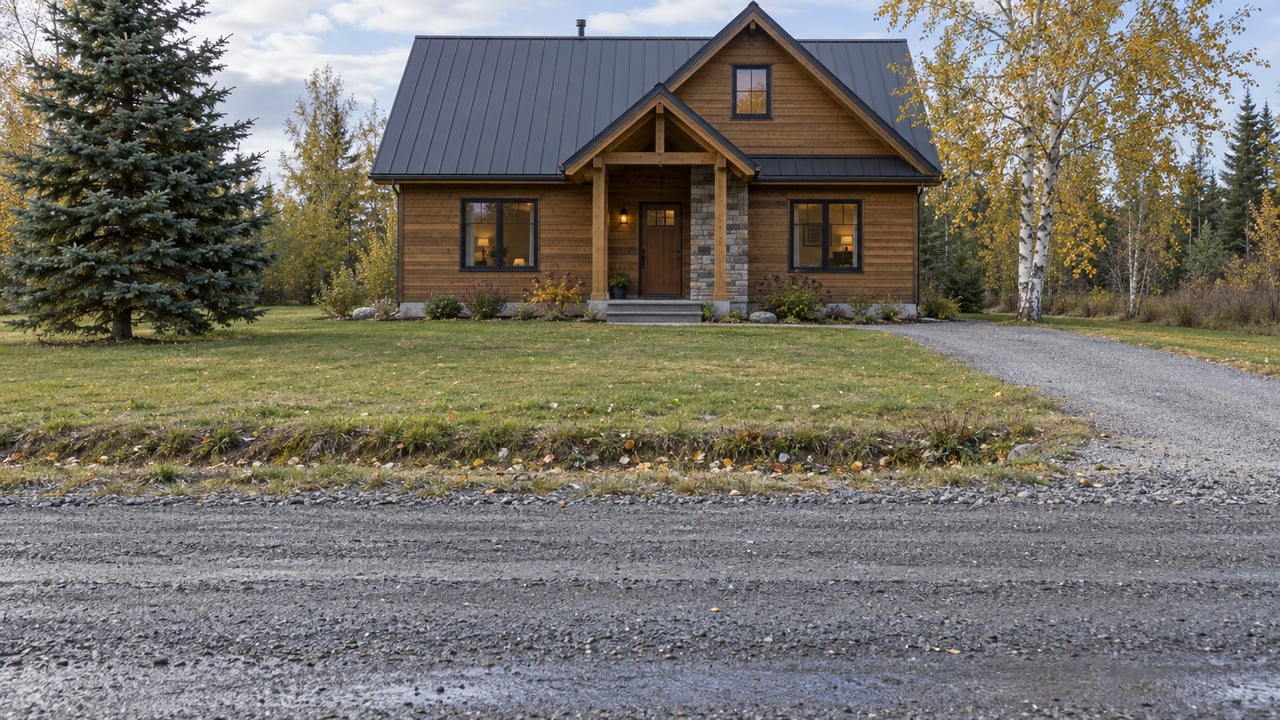
Two houses can share a Wasilla, AK mailing address, a similar price, and a similar lot size, and still sit behind completely different winter service. One driveway gets cleared within hours of a four-inch snowfall by a contractor whose truck is tracked live on a borough dashboard. The other sits on a road that no government agency has ever agreed to maintain, because nobody has petitioned for it. Nothing on a listing sheet flags the difference. Neither does the zip code.
The City of Wasilla says this directly on its own road maintenance page: not every road in and around Wasilla is maintained by the city, and having a Wasilla mailing address does not necessarily mean the property sits inside city limits. A meaningful share of properties that say "Wasilla" on the envelope are actually unincorporated parcels in the Matanuska-Susitna Borough, governed by an entirely different system of roads, taxes, and winter service standards than the streets inside the city boundary. For a buyer comparing homes by price per square foot, that's an invisible variable sitting underneath the number.
One Address, Three Possible Road Authorities
Inside Wasilla's roughly 13 square miles, the city itself maintains about 96 miles of road, 87 of them paved and 9 gravel. Many other roads touching a Wasilla-area address fall to one of two additional authorities. The Alaska Department of Transportation and Public Facilities maintains the major arterials that run through town, including the Parks Highway, the Palmer-Wasilla Highway, Knik-Goose Bay Road, Wasilla-Fishhook Road, Bogard Road, Church Road, Main Street, and Old Matanuska Road. Many of the subdivisions and side roads that surround the city fall to the Matanuska-Susitna Borough, which maintains roads through a network of 16 active Road Service Areas.
For roads with an assigned authority, that three-way split matters because each authority runs on its own budget, its own contractor relationships, and its own definition of an acceptable response time. A house a quarter mile off the Parks Highway might be on a state-maintained frontage road, a city street two blocks in, or a borough RSA road two blocks past that, and the difference determines who you call when the driveway floods or the plow never comes.
What a Road Service Area Actually Buys You
For property outside city limits, the RSA is the whole ballgame. Each of the Borough's 16 RSAs is run by a locally elected board of supervisors, meets monthly, most on the third Thursday, and is funded by its own mill levy set annually by the Assembly, as the Mat-Su Borough's tax transparency page explains. That levy is what pays a private contractor to plow, sand, grade, and patch roads within that specific service area. It's also why service quality varies from one RSA to the next even though they're all technically "Mat-Su Borough."
A 2024 contract renegotiation made the gap concrete. The Borough rebid nine RSA contracts covering roughly 800 of its more than 1,100 maintained road miles, in a combined package worth about $15 million, according to reporting in the Mat-Su Sentinel. Those contracts introduced live GPS tracking of snowplows for the first time in several areas, something Alaska communities have historically been slow to adopt, and tightened the rules on snow berms left across driveways after a storm, but not evenly. Two of the nine areas, Midway and Fairview, were required to clear driveway berms completely that winter. The other seven, including Knik, Greater Willow, Bogard, Gold Trail, Big Lake, and Meadow Lakes, kept the standard 12-inch berm allowance that had applied for years.
Here's what that split looked like under the 2024 contracts:
| RSA 9 (Midway) & RSA 14 (Fairview) | Other 2024-contract RSAs | |
|---|---|---|
| Driveway berm after plowing | Cleared completely | Up to 12 inches allowed |
| Snowplow tracking | Included in contract | Rolling out gradually |
| Contract cycle | Part of $15M, nine-area package | Part of $15M, nine-area package |
A homeowner in Fairview and a homeowner in Bogard both paid an RSA mill levy and both technically lived in "the Borough," but only one of them woke up to a driveway a plow had already cleared.
The system hasn't sat still since. The Borough opened a new round of RSA contract bidding in early 2026, shortening terms from the old three-to-five-year structure down to one year with two optional one-year extensions, and dropping the performance bond requirement so smaller local contractors could compete for the work. Whatever berm standard and tracking setup applies to a given RSA this winter depends on whichever contract was just awarded under that newer, faster-turning process, not a fixed borough-wide rule carried over from 2024. That's a detail worth confirming for the specific RSA a property sits in rather than assuming an older number still holds.
The Category a Listing Will Never Mention
The version of this that catches buyers off guard isn't a service-level gap between two RSAs. It's the roads that belong to neither an RSA nor the city nor the state at all. Borough public works officials told the Assembly earlier this year that a new feature on the Borough's website now shows the mileage of these unmaintained roads by assembly district, along with an estimate of what it would cost to bring each one into RSA maintenance. Officials also outlined the petition process residents can use to request that a road be added.
There's a catch built into that process. Before the Borough will even consider taking on a road, it has to be certified as built to Borough standard. If it isn't, the Borough's own FAQ is explicit that the cost of bringing the road up to a certifiable condition falls on the residents who live along it, not the Borough. That means a buyer looking at a home on an unmaintained gravel road isn't just accepting a slower plow. They may be looking at a future assessment, a private contractor bill, or years of driving over a road exactly as rough as it was the day they bought the house.
Before You Write the Offer
None of this shows up in a square-footage comparison or a median price pulled from the MLS. It shows up when you ask one specific question about one specific road.
- Confirm whether the property is inside Wasilla city limits or in the unincorporated Borough. A Wasilla mailing address alone doesn't answer this.
- If it's in the Borough, find out which of the 16 Road Service Areas the road falls under, and whether that RSA's current contract includes berm removal or live tracking.
- If the road is unpaved or looks informally built, ask whether it's been certified to Borough standard. If it hasn't, ask who has historically paid for grading and repairs.
- Check whether the road appears on the Borough's unmaintained-roads list. If it does, ask whether a petition to add it to an RSA has ever been filed, and what the estimated cost estimate was.
- Factor the RSA's annual mill levy into your total holding cost the same way you would a homeowners association due. It funds something an HOA fee usually doesn't: the actual road you drive on every day.
A Few Questions Worth Asking Directly
Does an RSA cover paving and repaving, or just snow removal? RSA funding covers a range of maintenance including snow plowing, sanding, grading, drainage control, minor repairs, crack sealing, and patching. Larger reconstruction projects, like a full repave, typically require separate Borough funding or a voter-approved bond, not the RSA's annual mill levy alone.
What happens if my road isn't in any RSA and isn't state or city maintained? It stays unmaintained until residents either bring it up to Borough certification standard at their own cost and petition to have it added to an RSA, or continue maintaining it privately. The Borough's own tracking tool, discussed at an Assembly meeting earlier this year, is meant to make the scope of this problem visible district by district.
Is there a way to check road authority before I tour a home? The City of Wasilla publishes an interactive road maintenance map specifically to answer this question, since city officials note that identifying the correct authority is the first step before reporting any road issue.
A price per square foot tells you what the house costs. It says nothing about who shows up after the next four inches of snow, or whether anyone shows up at all. That's a conversation worth having with a local agent before an offer goes in, not after the first winter.
If you're comparing homes across Wasilla and the surrounding Borough and want a clear read on which roads carry which authority before you tour, the team at Wolf Real Estate can walk through it property by property.
This article is general information, not legal, tax or financial advice. Consult a qualified professional about your situation.